Skip to the builds
Mohit Patel

Mohit Patel is an electrical engineer who builds machines that move - autonomous vehicles, EV tech, drones and embedded systems that make you say WOW.

Mohit Patel (imohitpatel) - Embedded Systems & Autonomous Vehicle Engineer, Jabalpur

The world witnessed
the birth of

A creative person who loves to build things that work, out of imagination.

Scroll to change the channel

Now entering the hardware lab

10 projects. Keep scrolling.

Scroll to open the shutter

01 · Autonomous vehicle · Argus Industry

Argus Autonomous EV

Built with Gulshan at Argus Industry

A complete Level-3 autonomous electric vehicle - fully working, remote-controllable, and driven by our own drive-by-wire electronics.

L3
Autonomy level
EV
Electric drivetrain
By-wire
Throttle · steer · brake
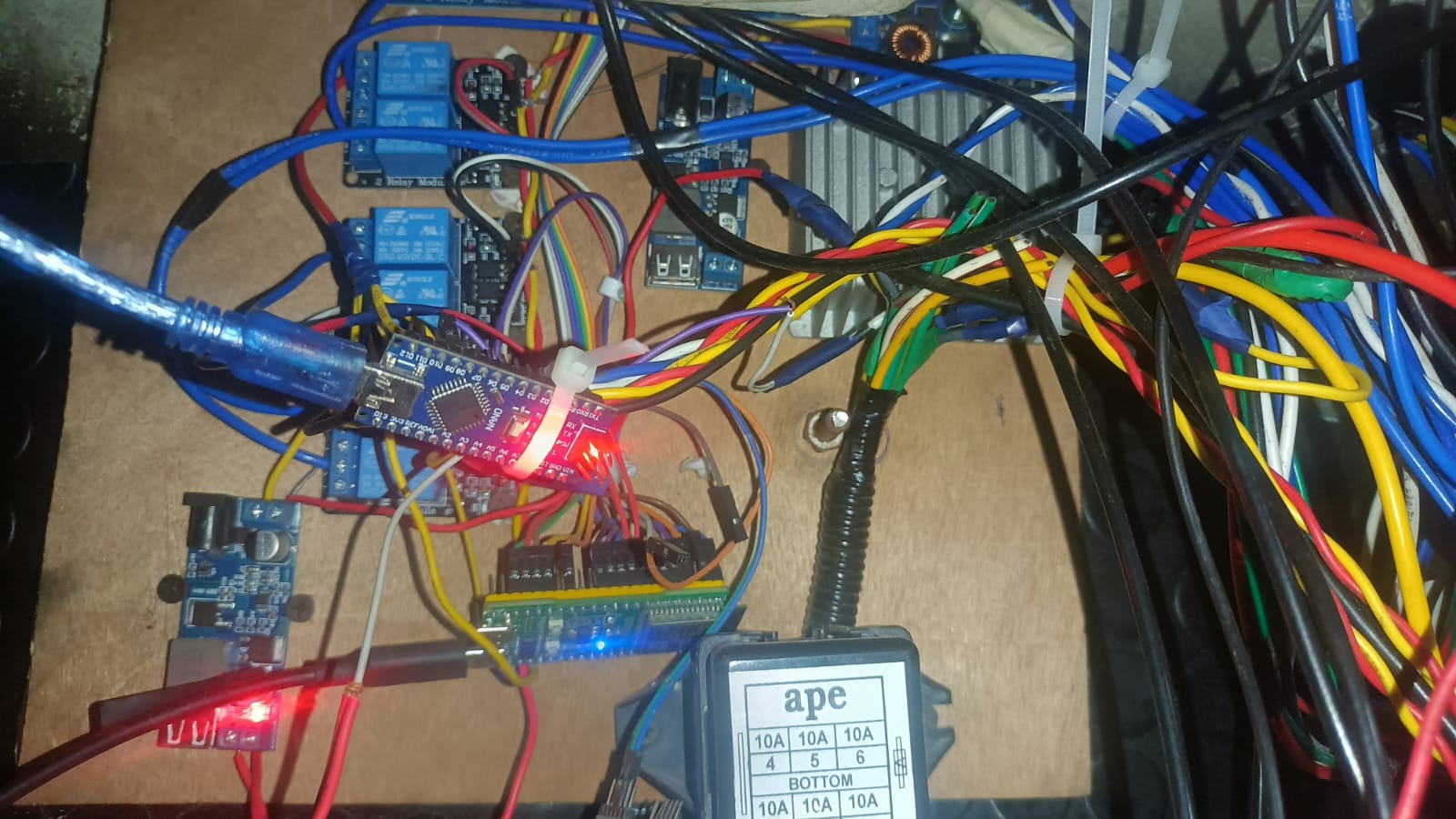
  • Acceleration first: we bypassed the stock ECU with H-bridge MOSFET drivers so a microcontroller could command forward and reverse drive.
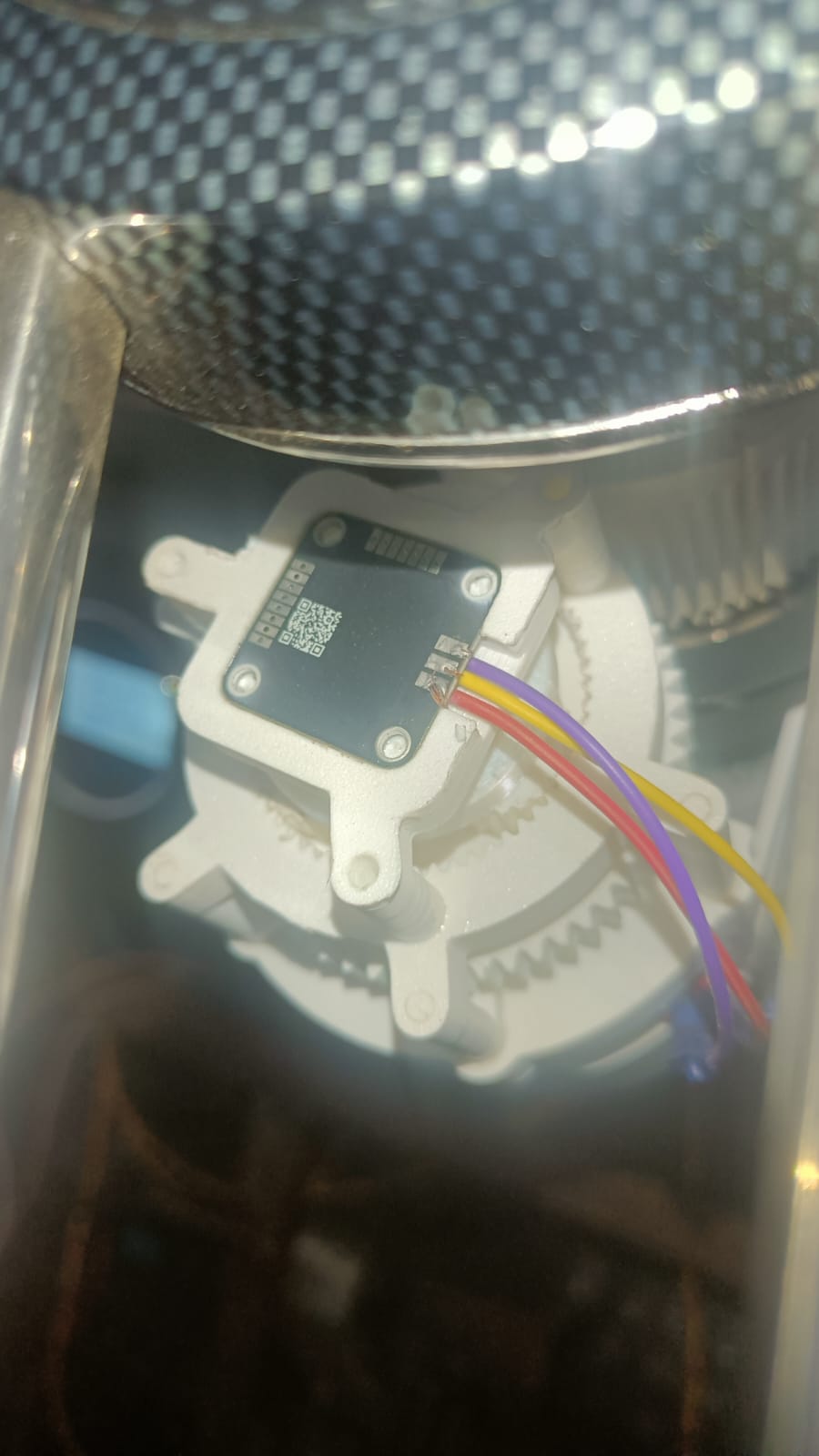
  • Steering by wire: the MCU triggers the steering actuator, with a magnetic encoder feeding back the exact steering angle.
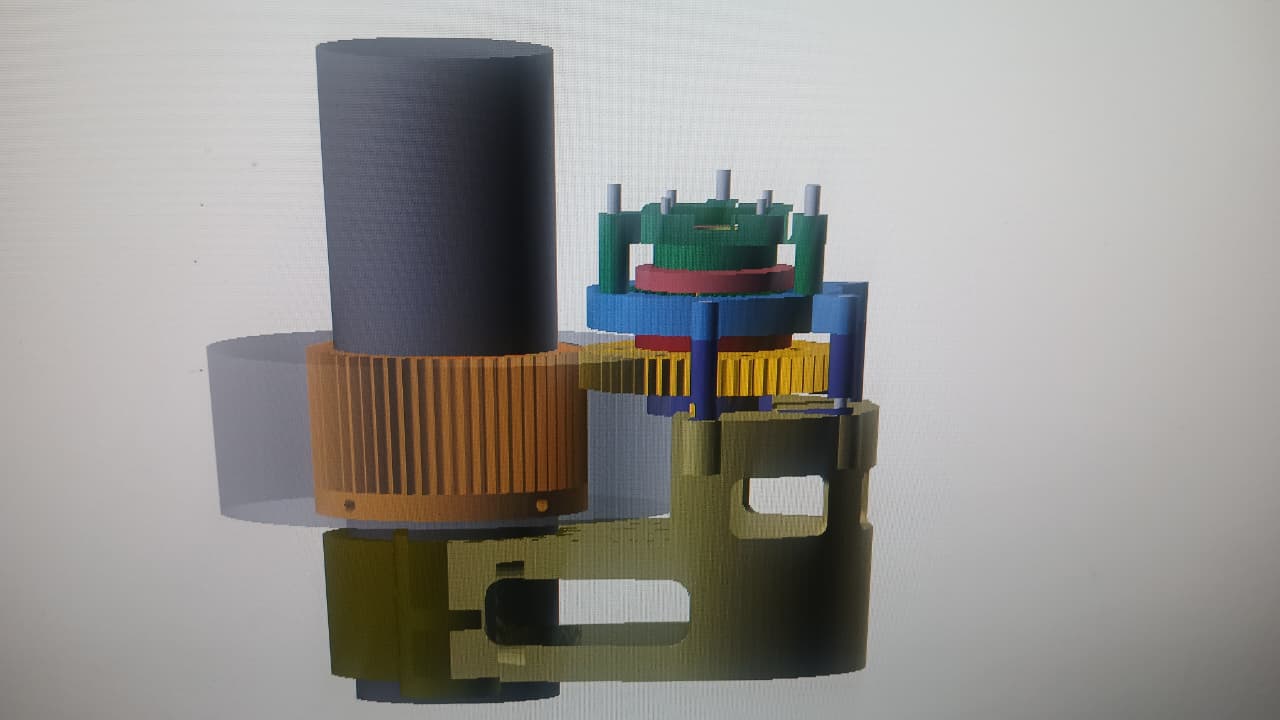
  • Braking: we built a custom brake actuator from a steering rack, and used a planetary gear system with a magnetic encoder to read brake position back.
  • Body controls: lights, horn and the rest of the vehicle functions were moved onto the MCU so the computer can drive everything.
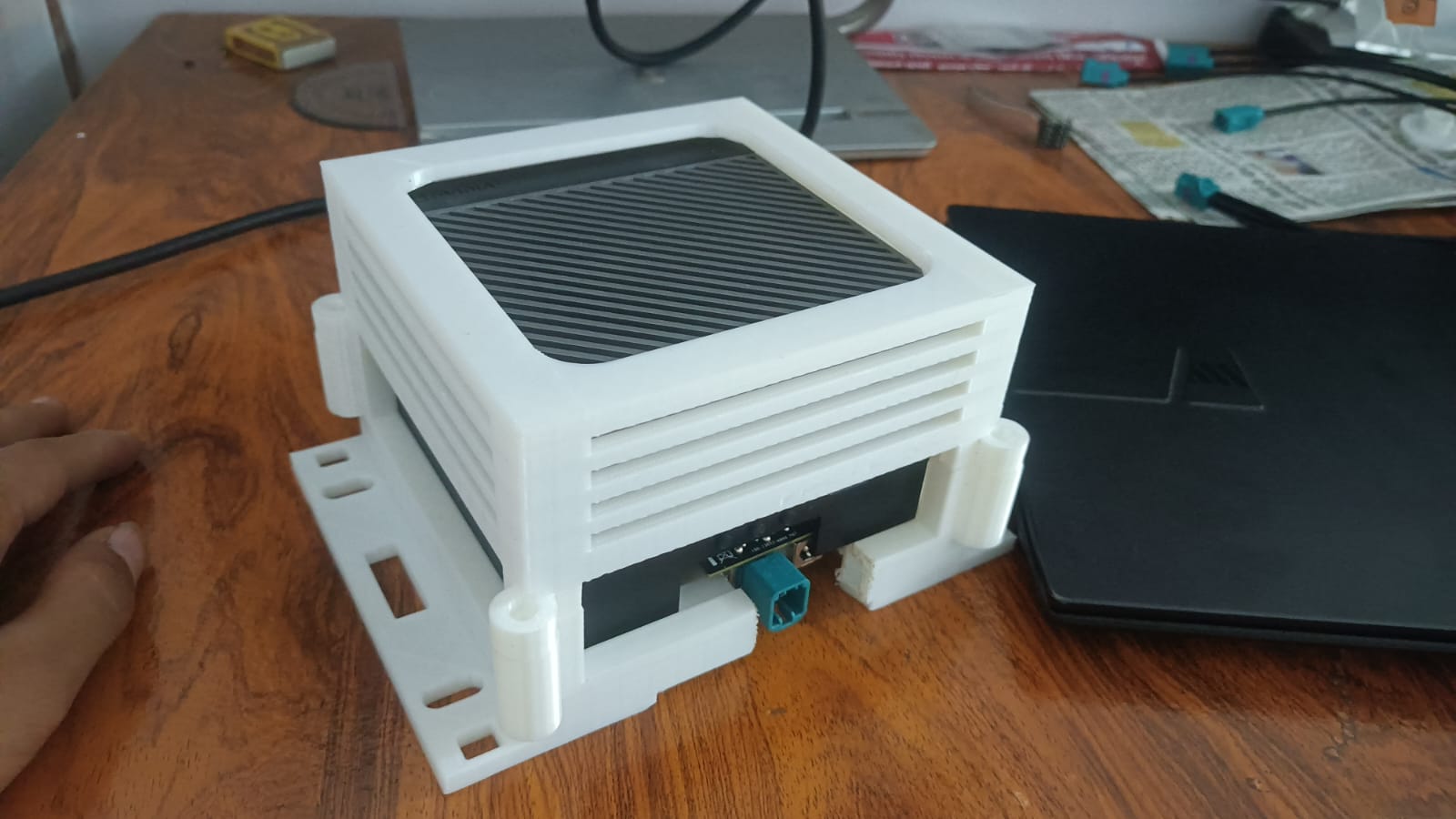
  • Brains and eyes: an NVIDIA Jetson AGX runs perception on ZED X stereo cameras, talking to ESP32 and Teensy controllers for real-time actuation.
  • The result is a full working vehicle that can be driven remotely and runs autonomously up to Level 3.
  • Argus Autonomous EV - build photo 1
  • Argus Autonomous EV - build photo 2
  • Argus Autonomous EV - build photo 3
  • Argus Autonomous EV - build photo 4
Full build log & 11 photos →

02 · EV · Electrical Lead · Automotive Society of JEC

Electric Bike

Team project, Automotive Society of JEC - Electrical Lead

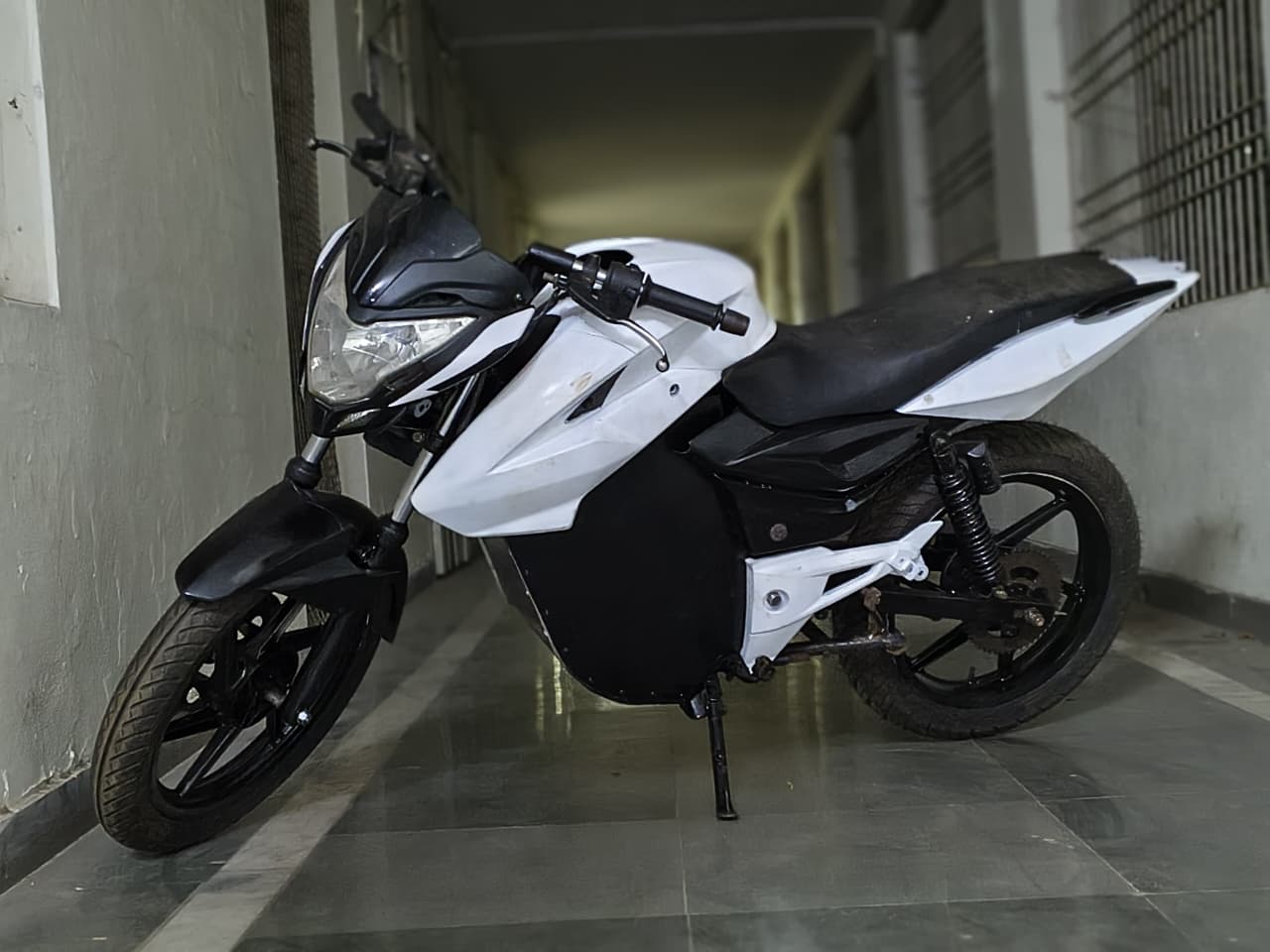
A street electric motorcycle where I led every electrical system - from battery data to our own custom dashboard and the full wiring harness.

Lead
Electrical systems
Custom
Dashboard console
Virtual
Gear system
  • Battery intelligence: a microcontroller reads live data from the BMS instead of leaving it locked inside the pack.
  • Our own console: a custom dashboard shows speed, battery, indicators and headlight status, designed and built by the team.
  • Speedometer from scratch, using a hall-effect sensor on the wheel.
  • Indicators and headlight control routed through the MCU.
  • The entire bike harness was designed and wired by us - every connector, fuse and route.
  • Virtual gear system: selectable ride modes that shape power delivery - smoother and safer for new riders, sharper when you want it.
  • Electric Bike - build photo 1
Full build log & 1 photos →

03 · Chassis to track · Automotive Society of JEC

Go-Kart

Team build, Automotive Society of JEC

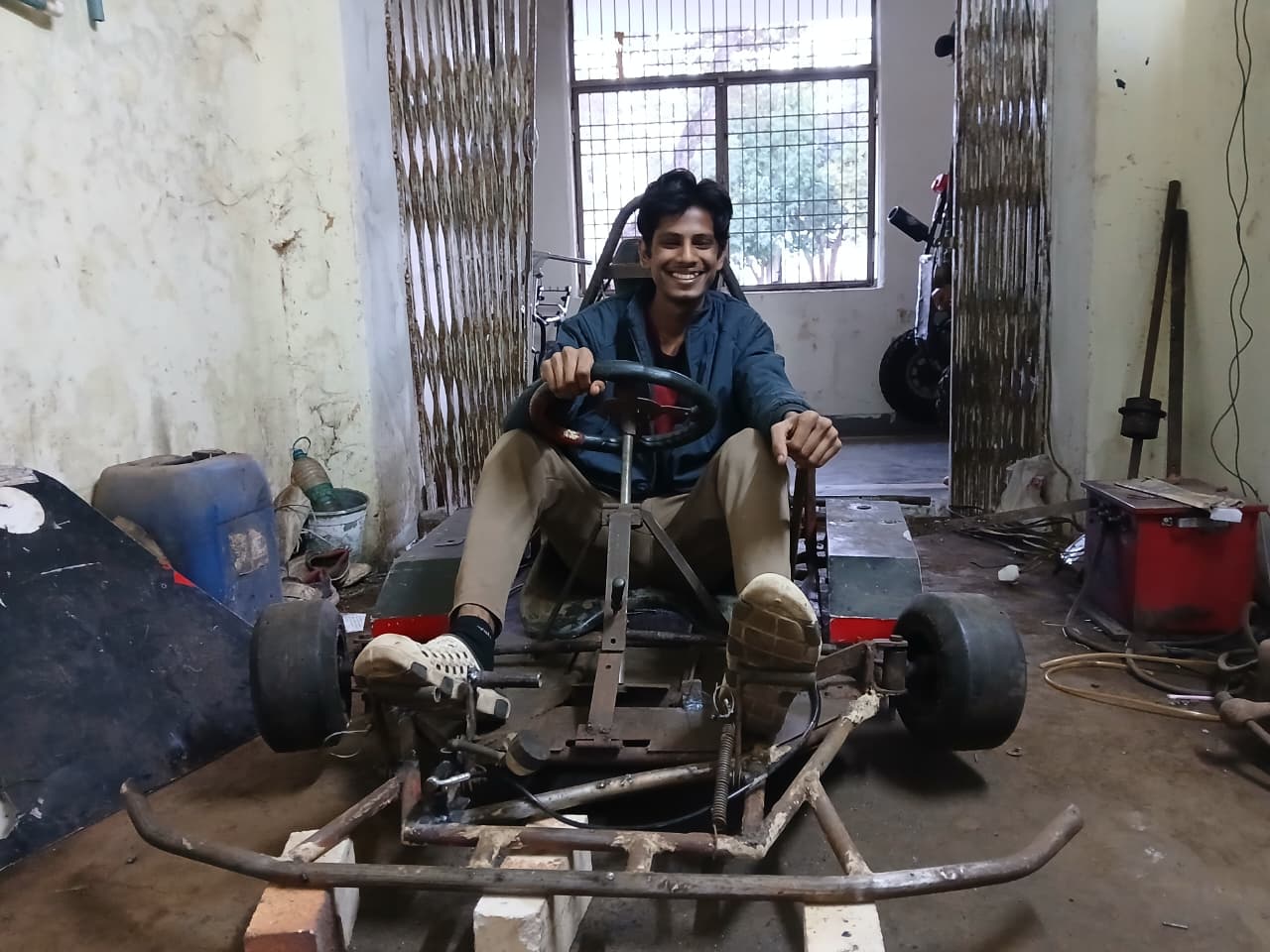
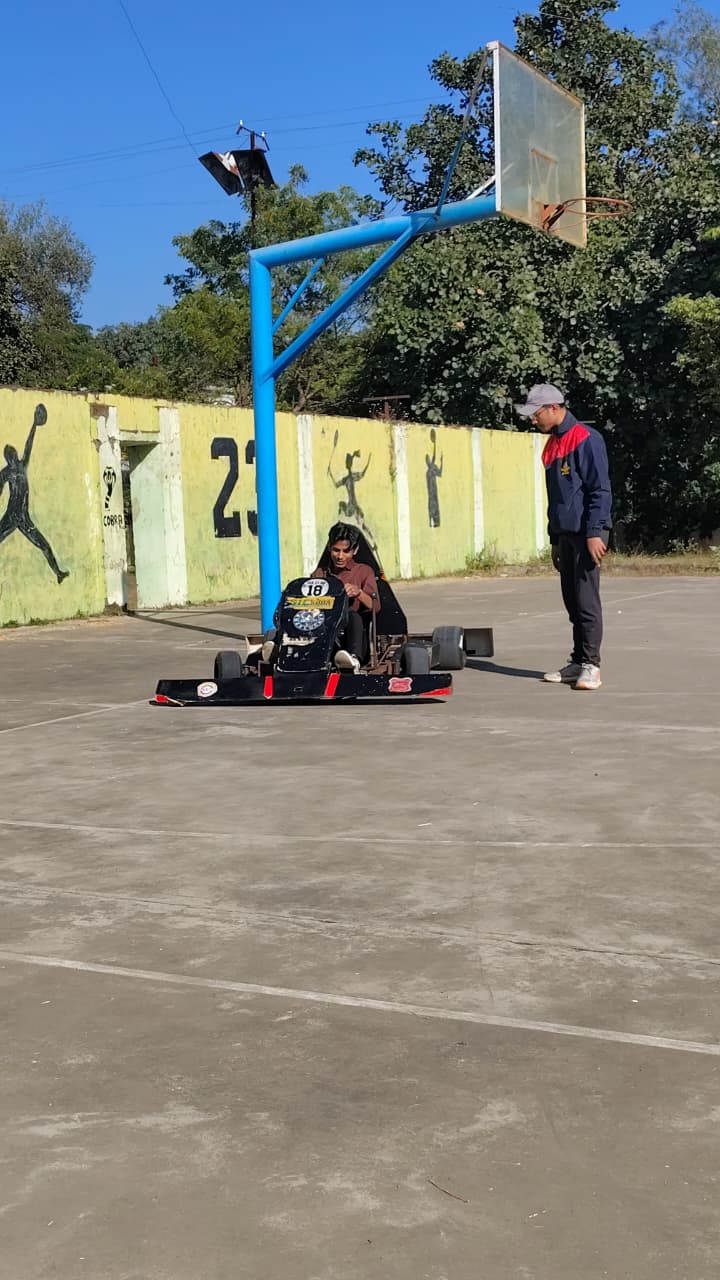
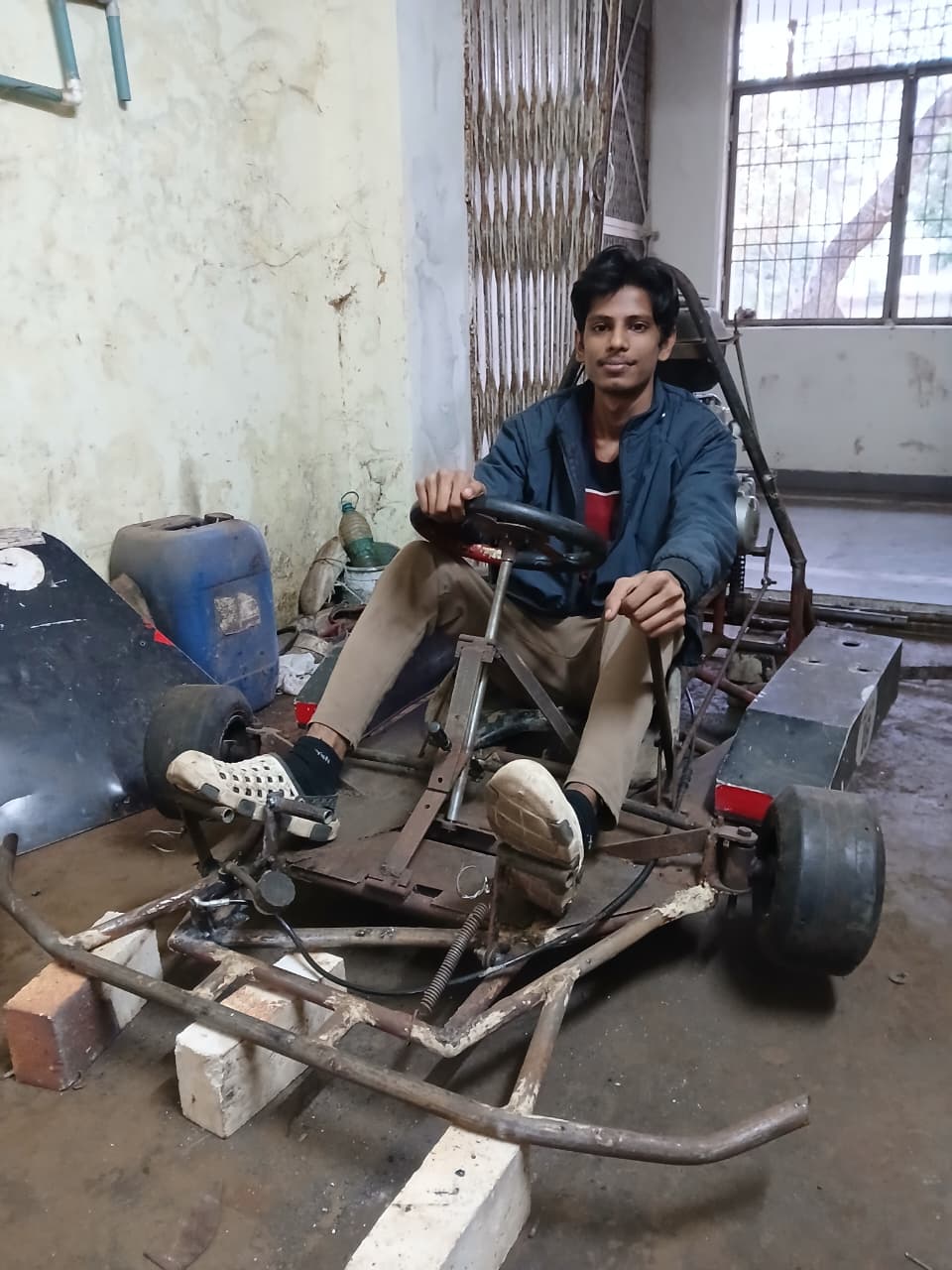
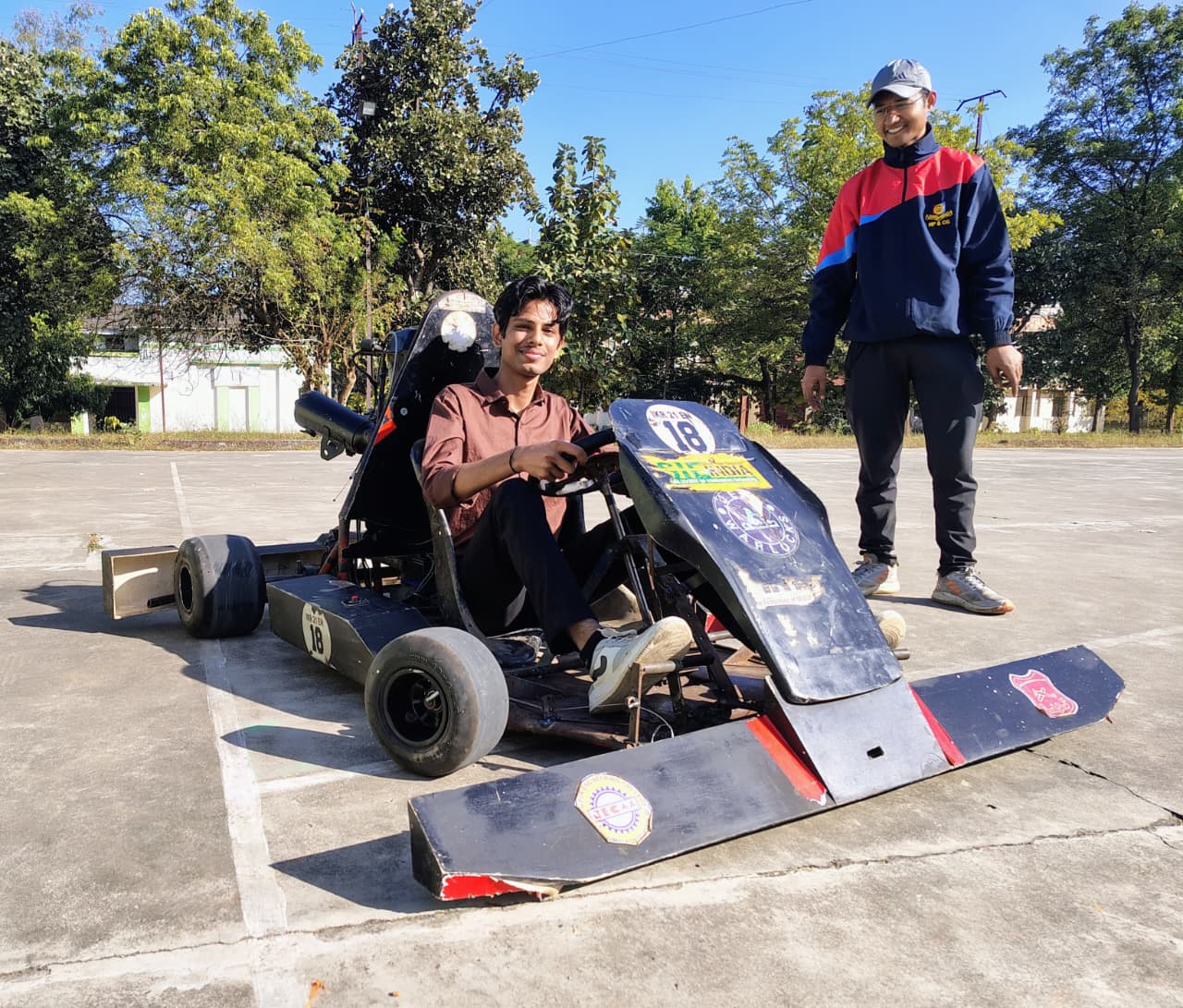
A go-kart built from scratch - from a bare chassis to running condition.

Scratch
Bare chassis start
Welded
Steel frame
Running
Track condition
  • Started from raw tube and a drawing - the chassis was designed and fabricated by the team.
  • Hands-on mechanical design and welding to get the frame, steering and mounts right.
  • Wired the engine electrical system with relays for clean, reliable switching.
  • Took it all the way to running condition.
  • Go-Kart - build photo 1
  • Go-Kart - build photo 2
  • Go-Kart - build photo 3
  • Go-Kart - build photo 4
Full build log & 6 photos →

04 · Embedded · Aerospace Club, IIIT Jabalpur

ESP32 Micro Drone

Presented at the Aerospace Club of IIIT Jabalpur - Drone Soccer League

A 42-gram quadcopter built around an ESP32 for under ₹2,500 - with my own ESCs.

42 g
Total weight
<₹2,500
Total cost
30C
1000 mAh battery
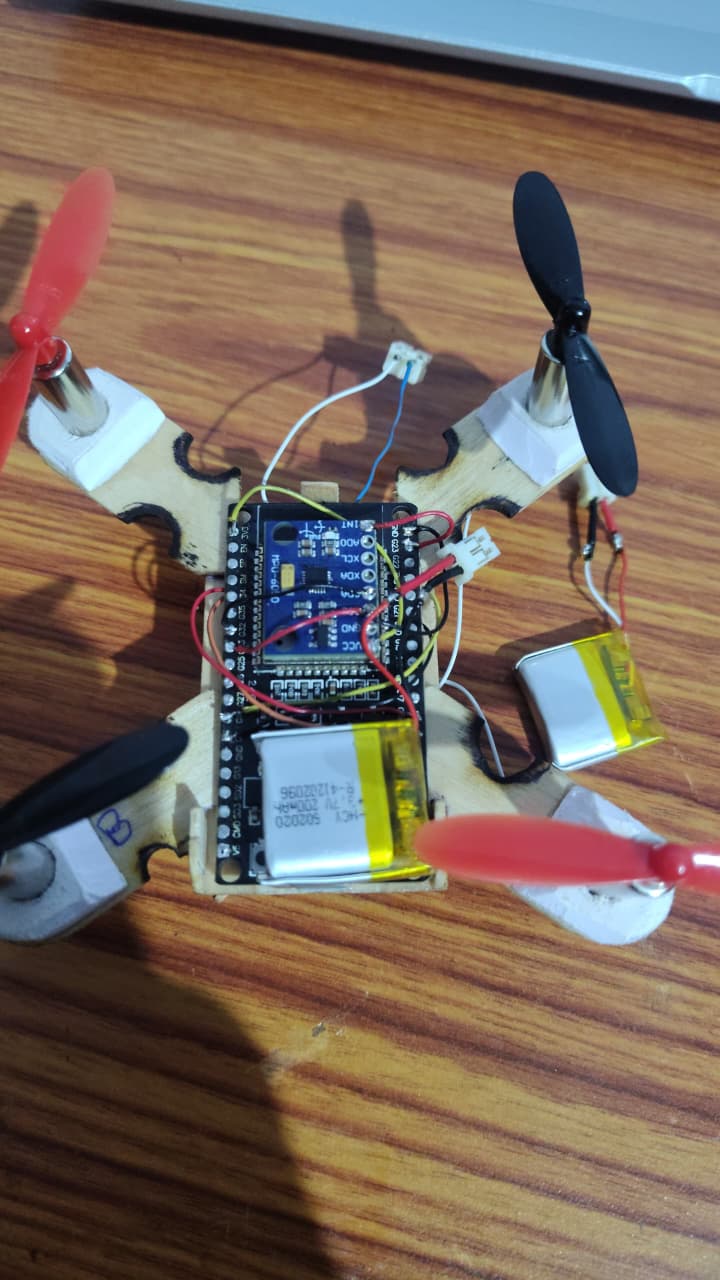
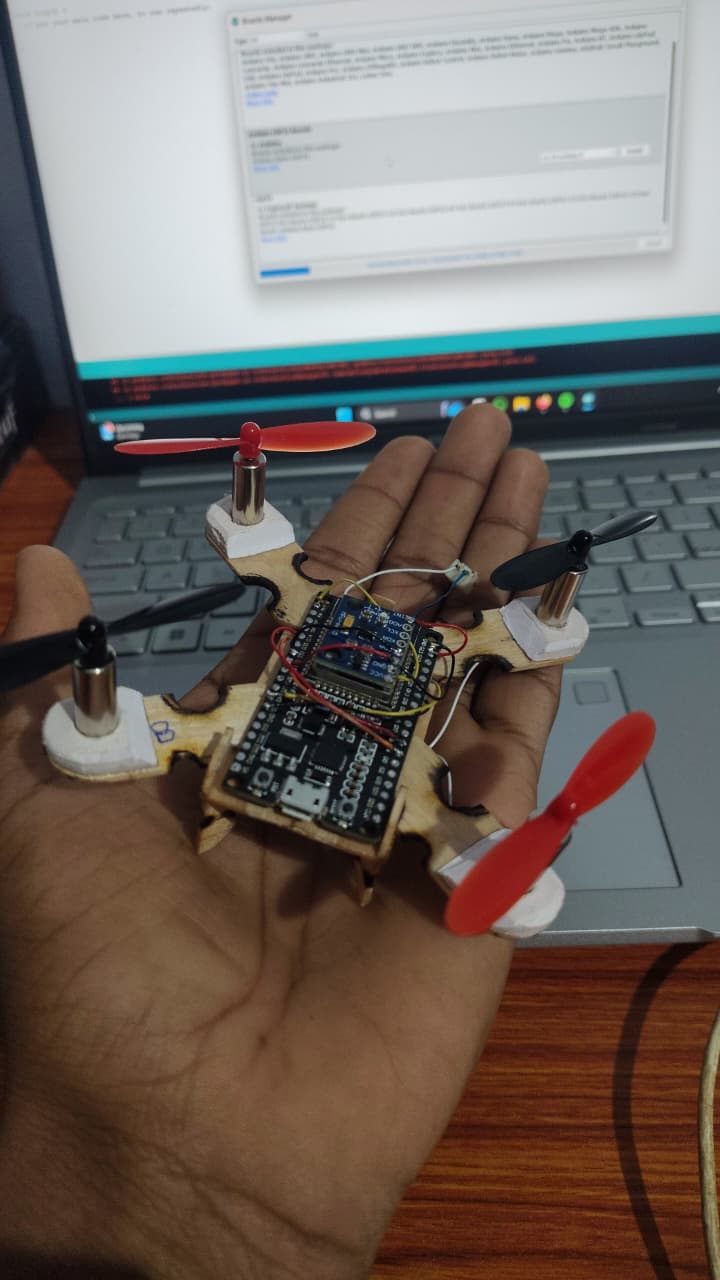
  • Flight controller on an ESP32 with an onboard IMU.
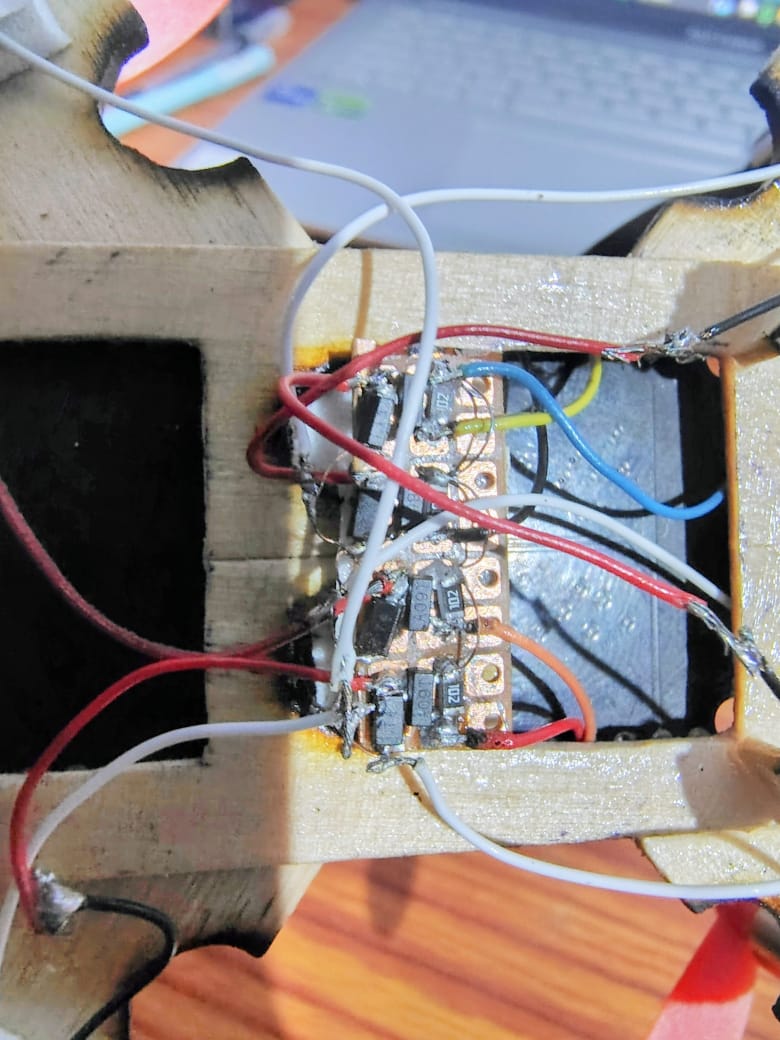
  • Custom ESCs made from N-channel MOSFETs and resistors - no off-the-shelf speed controllers.
  • Coreless motors on a lightweight custom frame keep the whole drone at 42 g.
  • A 30C 1000 mAh battery for good flight time.
  • Built for under ₹2,500 and presented at the Aerospace Club of IIIT Jabalpur in the Drone Soccer League.
  • ESP32 Micro Drone - build photo 1
  • ESP32 Micro Drone - build photo 2
  • ESP32 Micro Drone - build photo 3
Full build log & 3 photos →

05 · IoT · TFRI Jabalpur

Forest Guard - Anti-Logging Sensor

Built under the Tropical Forest Research Institute (TFRI), Jabalpur

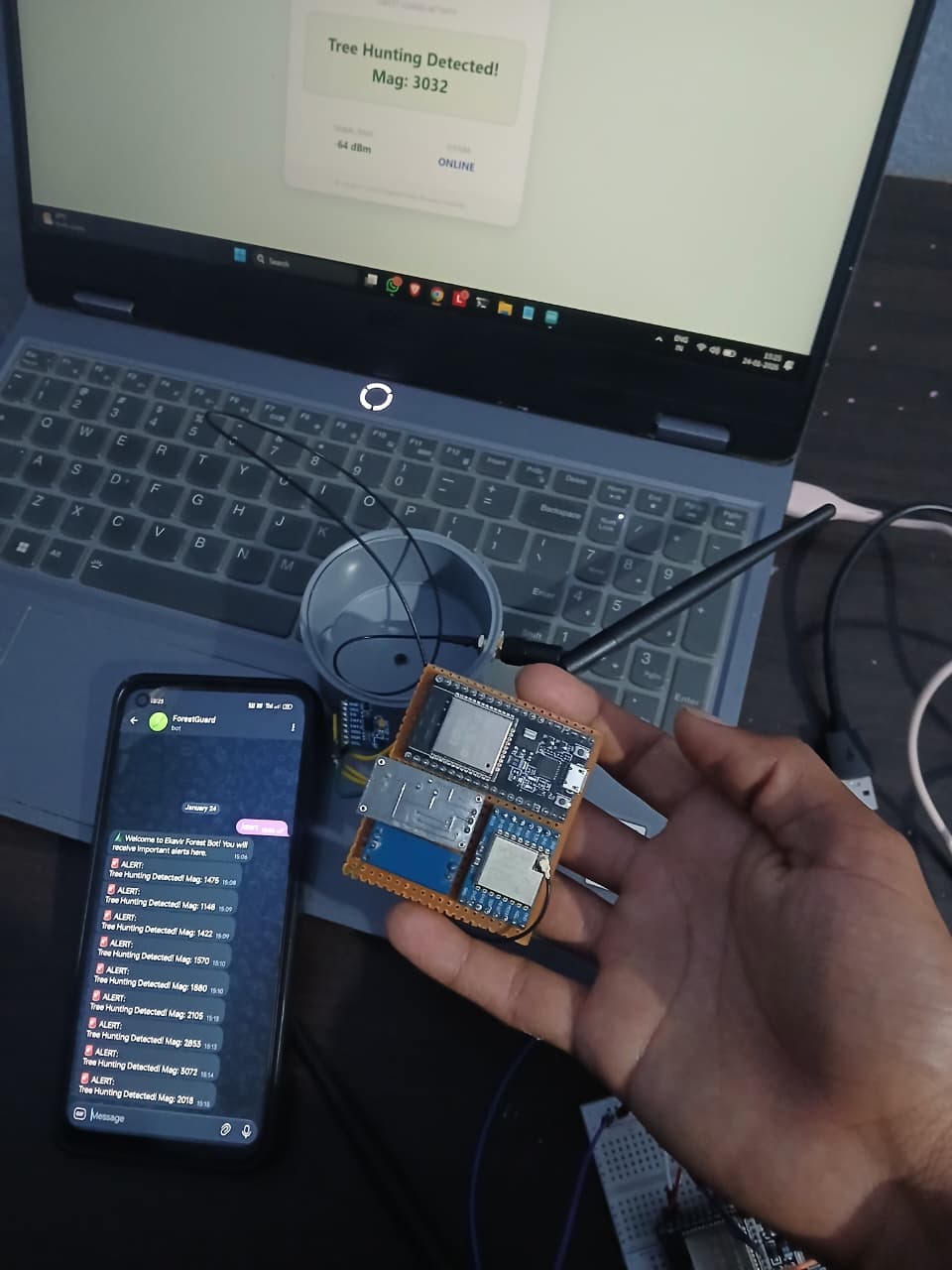
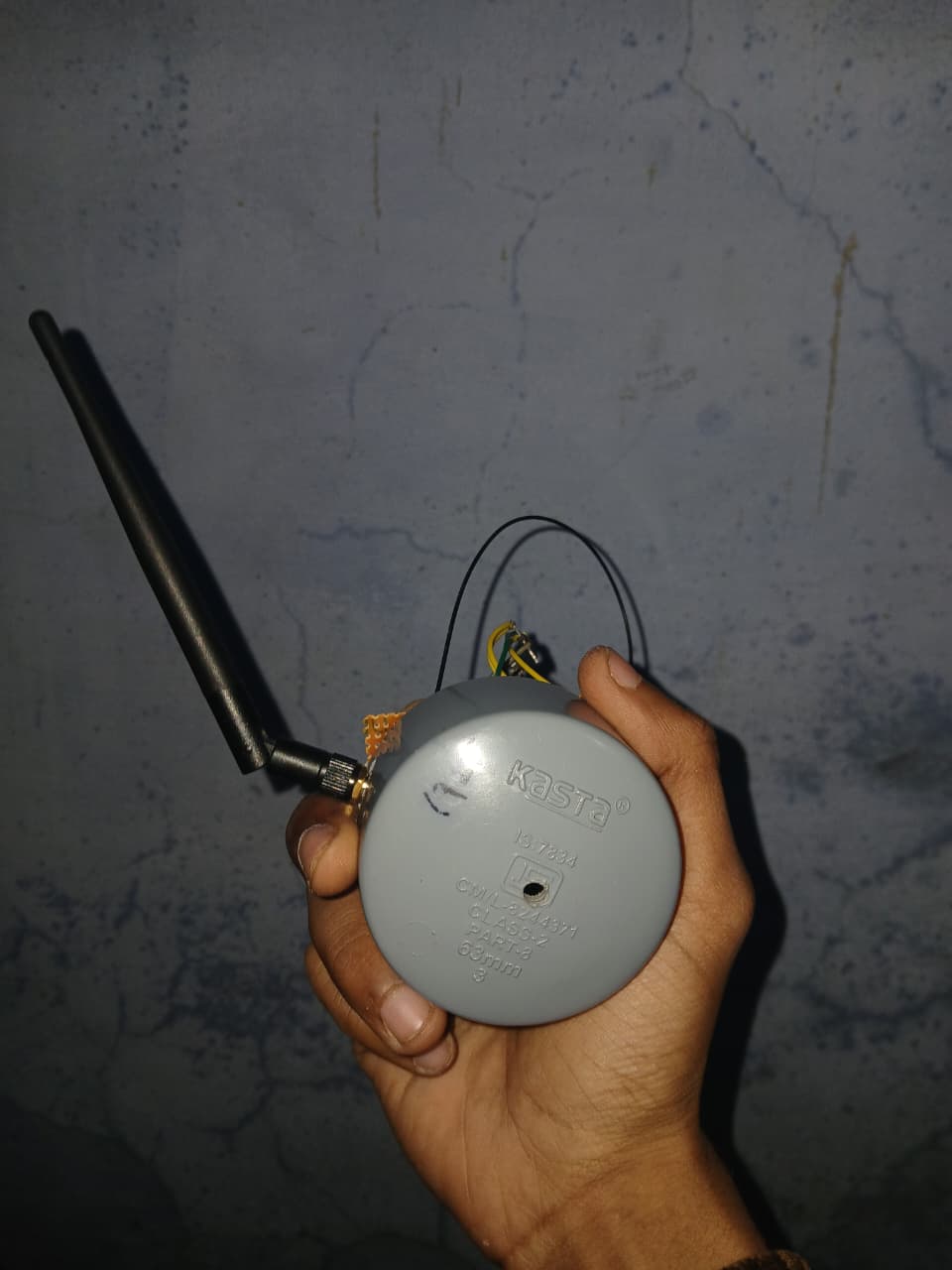
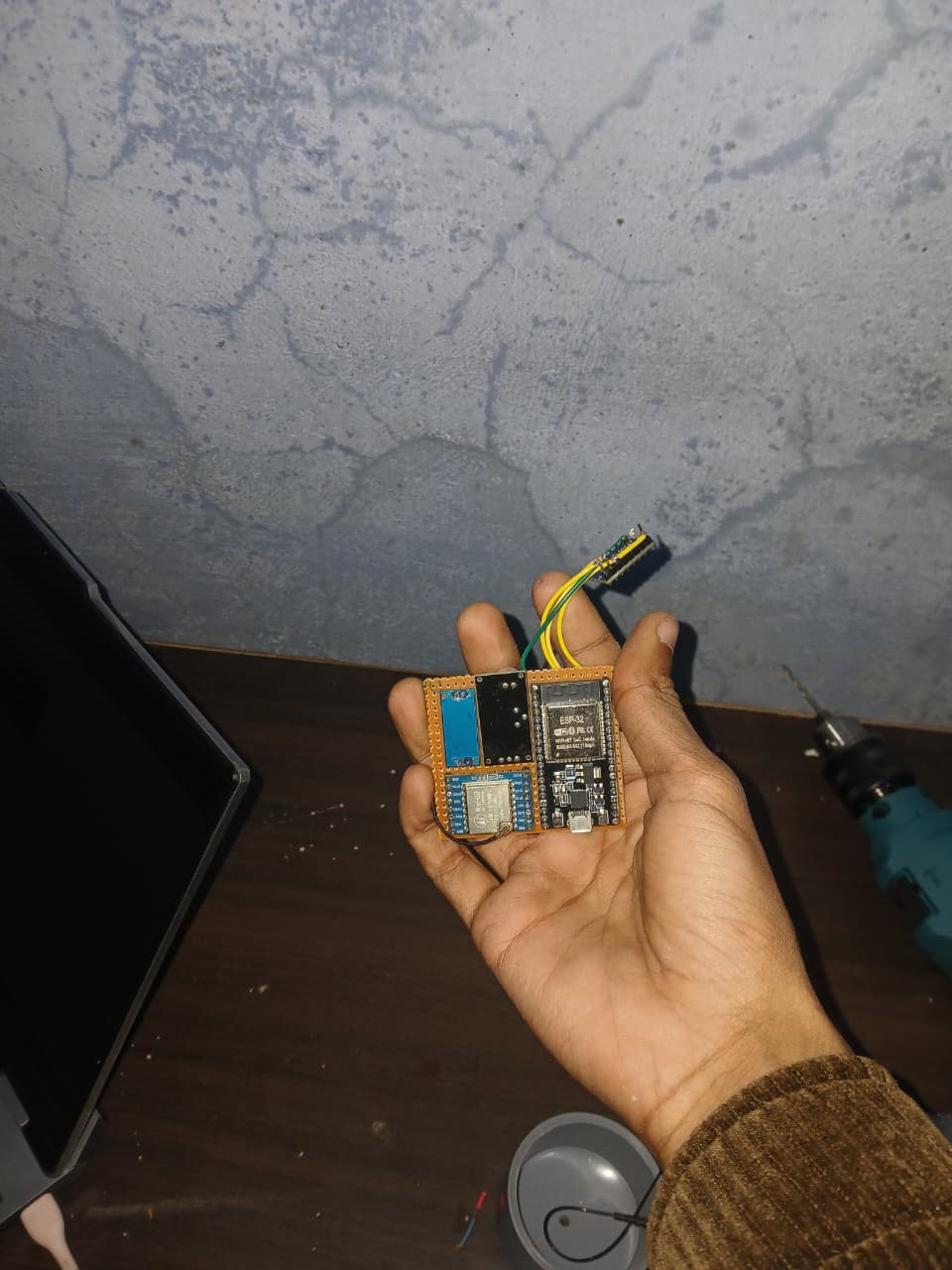
A tree-mounted device that hears illegal logging - it detects the vibration and noise of cutting and alerts rangers instantly.

20 ft+
Mounted up the tree
Solar
Self-charging
SMS
Instant ranger alerts
  • The device screws into a timber tree and senses the vibration and noise made when someone starts cutting it.
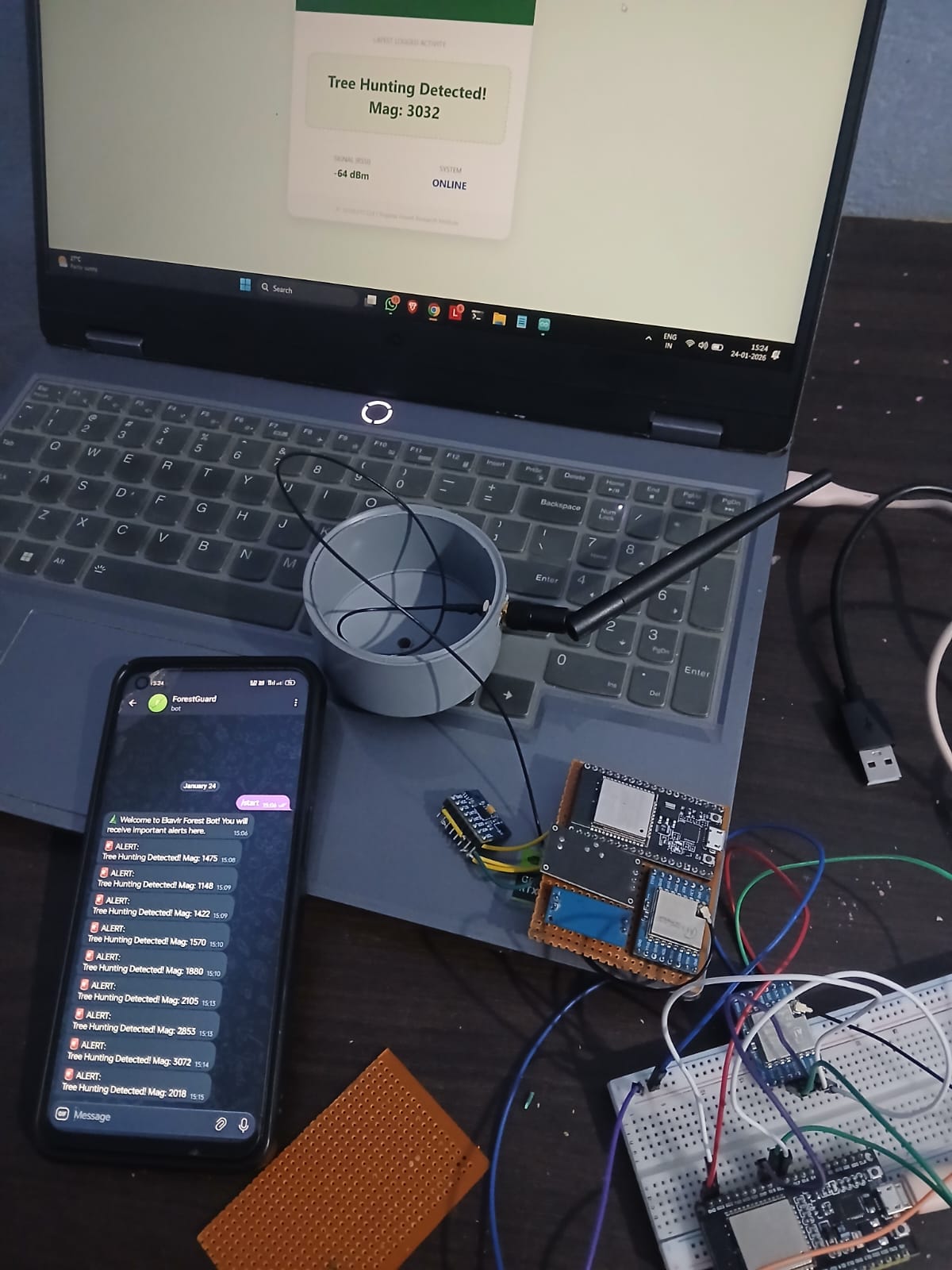
  • An alert goes live on the dashboard, and messages go to forest rangers, administration and everyone concerned.
  • Mounted 20 feet or more up the trunk so it cannot be pulled off.
  • Runs on a battery charged by a small solar panel - no wiring in the forest.
  • Forest Guard - Anti-Logging Sensor - build photo 1
  • Forest Guard - Anti-Logging Sensor - build photo 2
  • Forest Guard - Anti-Logging Sensor - build photo 3
  • Forest Guard - Anti-Logging Sensor - build photo 4
Full build log & 5 photos →

06 · Edge AI · Computer vision · Geospatial · Research

Real-Time Wildlife Monitoring

Research paper: “Adaptive Occlusion Edge Intelligence for Real-Time Wildlife Monitoring and Water Source Analysis Across Diverse Ecosystems” - Mohit Patel, Jabalpur Engineering College

An edge-AI system on sub-$150 hardware that detects, tracks and maps wildlife around water sources - 87.3% mAP@0.5 at 7.7 FPS on a Raspberry Pi 4, with an occlusion-aware method that adds 11.2 points under forest canopy.

87.3%
mAP@0.5 (15 species)
7.7 FPS
Raspberry Pi 4 · 5.9 W
+11.2 pts
Under heavy canopy
  • The problem: water sources decide where wildlife gathers, especially in summer, but collars, camera traps and manual surveys are slow, costly and intrusive.
  • Ground nodes: a Raspberry Pi 4 with Camera Module v2 and a Neo-6M GPS (5-8 m accuracy) runs the full pipeline at the water hole; ESP32-CAM units wake on a PIR sensor and take one image every 5 s at 0.8 W.
  • Aerial survey: drone imagery over a 2 km² mixed-deciduous forest plot in central India - 50 m altitude was chosen after testing 30, 50 and 70 m. My own 2.5-inch FPV drone carries a Raspberry Pi and a detection camera for low passes over water holes.
  • Detection: YOLOv8n fine-tuned on 12,000 hand-annotated frames of 15 species (forest plot, drone and Snapshot Serengeti), quantised to INT8 - 89 ms per frame on the Pi.
  • My occlusion-aware confidence modulation scores how hidden an animal is from image texture and edges, and boosts confidence near water: under heavy canopy, mAP rose from 75.8% to 87.0%.
  • Tracking: Deep SORT with an occlusion penalty keeps each animal’s ID - 55% fewer ID switches (4.1 vs 9.2 per 1,000 frames) and MOTA up from 73.8% to 79.1%.
  • Mapping: every detection is GPS-tagged and pinned on the map; kernel-density heatmaps with 50/75/90/95th-percentile contours reveal saturation zones - 124 m mean radius around the main water source, from 142 m for chital to 85 m for leopard.
  • Counting: animals are tallied per species and saved for the forest administration, so they know how many of each species use each water source.
  • Results: 87.3% mAP@0.5 overall, 5.7 points above MegaDetector v5; 90.4% species classification; whole pipeline 130 ms per frame (7.7 FPS) at 5.9 W.
    Full build log →

    07 · Software · Optimisation · Python

    Genetic Algorithm Timetable Scheduler

    Custom model for university student timetable scheduling

    A genetic algorithm model that builds university student timetables, with role-based functionality - written in Python.

    GA
    Genetic algorithm core
    Python
    Custom model
    Roles
    Role-based functionality
    • Requirement: build a custom model for university student timetable scheduling, with role-based functionality.
    • Approach: a genetic algorithm - a population of candidate timetables is scored, the fittest are combined (crossover) and randomly tweaked (mutation), generation after generation, until a clash-free timetable emerges.
    • Role-based functionality: different university users get the features that match their role.
    • Built with Python technologies.
      Project details →

      08 · Web · HTML · CSS · JavaScript

      Amulya Jewelry Website

      06.2024 - present

      A highly customizable website built with basic HTML, CSS, and JavaScript.

      Inertia
      Natural touch scrolling
      Drag
      Mouse drag & scroll
      ∞
      Infinite loop scrolling
      • Natural touch scrolling with a smooth inertia effect on phones.
      • Mouse drag and scroll support for desktop.
      • Infinite loop scrolling.
      • Highly customizable, built with basic HTML, CSS and JavaScript.
        Project details →

        09 · AI · Voice · Web app

        NeoZen - AI Voice Analysis

        Phase 1 built: the web app and its models · Phase 2 planned: a wearable locket

        An AI voice-analysis web app that listens 24×7, picks out what matters in your conversations - meetings, who said what, tasks - puts events and tasks into Google Calendar, sends voice reminders and gives you a summary at the end of the day.

        24×7
        Always listening
        Calendar
        Events & tasks auto-added
        Daily
        End-of-day summary
        • Listens to your voice 24×7 and records the data.
        • When something important comes up - like a meeting in that day’s conversation - it captures what was talked about, with whom, and the details.
        • Scheduled tasks and events are added to Google Calendar automatically.
        • Voice reminder alerts before things are due, and a summary of your day at the end of it.
        • Phase 1 (built): the core algorithm with sentiment analysis, speech-to-text and a summary model.
        • Phase 2 (planned): a hardware locket with a microphone that records messages and does much more on the go.
          Project details →

          10 · Mobile · Road safety · Sensor fusion

          RoadAlert - Accident Detection & SOS

          A phone camera mounted front-facing on the road

          A front-facing mobile camera that detects road accidents. When a crash happens it sends an SMS and an SOS call to the local police station and the nearest government hospital and shares live GPS location - using acceleration and gyro data so it doesn’t raise false alerts.

          SOS
          Police + govt hospital
          Live GPS
          Location shared
          Accel + gyro
          No false alerts
          • A mobile phone is mounted with its camera facing the road ahead.
          • If an accident happens, it sends an SMS and makes an SOS call to emergency services - the local area police station and the nearest government hospital.
          • Live GPS location is shared so help reaches the exact spot.
          • It reads all the phone’s sensors - acceleration, gyroscope and more - so bumps and potholes don’t trigger false alerts.
            Project details →